A woven fabric for separation and moderate reinforcement in embankments, access roads and foundation layers.
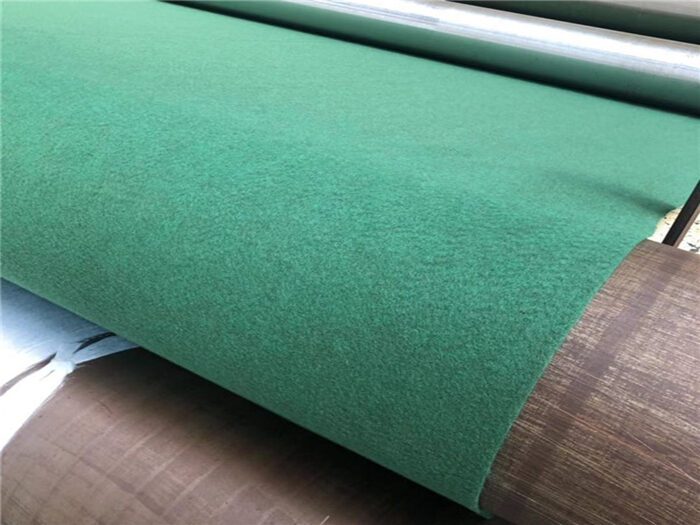
Representative photo of Woven Geotextile; final surface, width and roll length are confirmed at order.
| Fibre | Polypropylene (PP) flat or round yarn, woven |
| Mass per unit area | 80-300 g/m² |
| Width | 1-6 m, seamable into wider panels |
| Tensile strength | ≥ 20 kN/m for high-density grades |
| Elongation | ≤ 25%, dimensionally stable |
| Standard | Produced with reference to GB/T 17641 |
Typical production ranges for Woven Geotextile; project values are confirmed against the drawing and test report before shipment.
Request data sheet & quoteSeparation and reinforcement in embankments and access roads. The material package around Woven Geotextile — cushion geotextile, drainage, anchoring and welding — is selected with the same drawing.
Woven geotextiles give higher tensile strength per gram than nonwovens, but lower permeability and filtration performance. Use nonwoven where filtration and cushioning dominate.
Compare with my specificationRizhao port yard paving containment — 1.5 mm HDPE + geotextile under heavy-duty yard. Reference configuration for Woven Geotextile, not a delivered project record.
Reference configurations, not delivered project records.
A woven fabric for separation and moderate reinforcement in embankments, access roads and foundation layers.
Final thickness, width and surface are confirmed against the drawing, design head and chemical exposure.
Welding parameters and seam records for Woven Geotextile are supplied with the shipment; for the first production welds, an engineer can attend site.
Woven is used for separation and reinforcement where tensile strength is the driver. Nonwoven is used where filtration, drainage and cushioning are needed.
As a cushion under geomembrane, 500-600 g/m² is common; for drainage and filtration in normal earthworks 200-300 g/m² is usually sufficient. Check the design specification for tensile and permeability values.
Filament geotextile has higher tensile strength and better durability for reinforcement and heavy civil work. Staple fibre is cost-effective for filtration, separation and protection layers.
Yes. A 500-600 g/m² nonwoven geotextile is typically placed between the prepared subgrade and the geomembrane to prevent puncture and to provide drainage.
Other products in the geotextile range, plus the eight material systems used around Woven Geotextile.
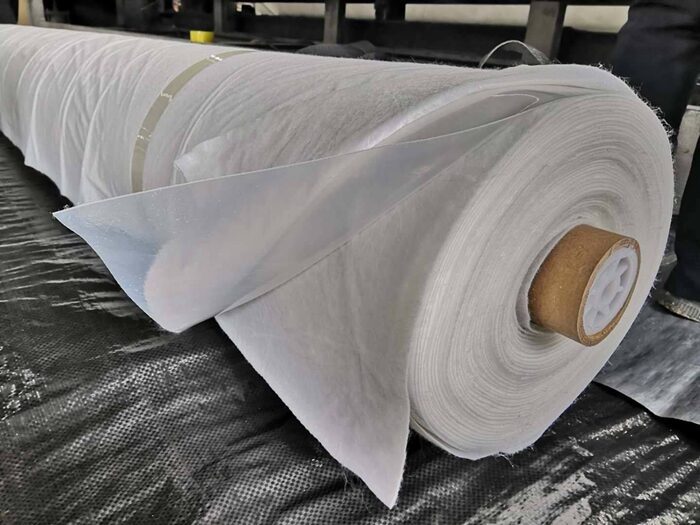 Nonwoven Geotextile
reinforcement, heavy filtration and protection layers
Nonwoven Geotextilefiltration and drainage where polyester chemical resistance is needed
Fill what you know. The button creates a structured email in your mail app; nothing is stored on this website.
Send the specification values, area, head and delivery port for Woven Geotextile; we will confirm the standard and reply with a material schedule.