Chemical-resistant lining for industrial wastewater, equalisation basins, aeration tanks and sludge beds, with pipe penetrations and joint details.
Industrial wastewater basins combine chemical attack, aeration movement and frequent cleaning. HDPE geomembrane is the default choice for its chemical resistance; where hydrocarbons or aggressive solvents are present, the designer should confirm compatibility and consider a secondary liner. All penetrations need mechanical boots and reinforced welding.
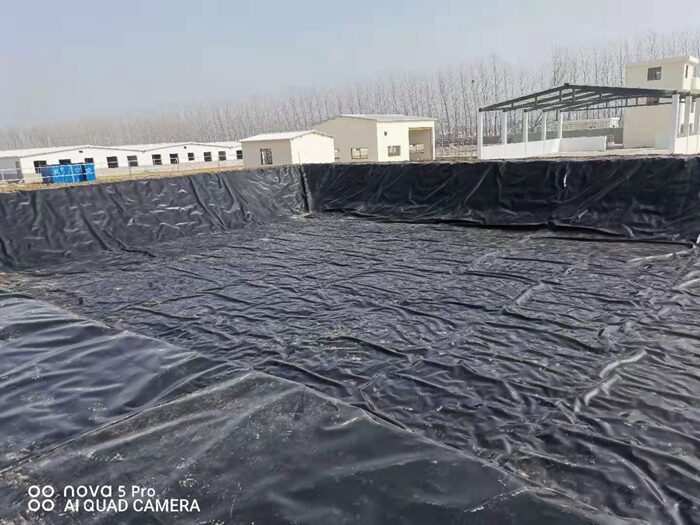
The layer sequence is a starting point. Final thickness, cushion and drainage are confirmed against the design head and chemical exposure.
Welding parameters and seam records are supplied with the shipment; an engineer can attend the first production welds for critical projects.
The package above is a typical starting point. The final layer sequence, thickness and cushion are confirmed against the design head, subgrade and chemical exposure.
Pipe boots, reinforced patches and extrusion welds are used at penetrations and corners. These details are agreed before installation, because they are the most common leak paths.
Yes. Send the drawing, specification clauses and bill of quantities. We will map the items to standard products and flag any value that needs a custom run.
The same material system behaves differently in each application. Browse the other eleven guides for the layer sequence and details that matter there.
Send the drawing, area, head and exposure. We will propose the layer build-up and a bill of materials.